

Space Ray introduces Big Foot Brooder Tube for poultry heating.
Big Foot Tube Brooders
Written by Hog Blogger on January 27th, 2012International Poultry Expo 2012
Written by Hog Blogger on January 27th, 2012Potter’s Poultry receives Seal of Approval from American Humane Association
Repair Metal Ceilings in Place
Written by Hog Blogger on January 13th, 2012Repair metal ceilings in swine buildings in place with products from Vanberg Specialized Coatings.
Medicator RX
Written by Hog Blogger on November 28th, 2011The only cleaner designed specifically for cleaning and maintaining volumetric medicators used in livestock and poultry.
New Lease of Life for Broiler Houses
Written by Hog Blogger on November 22nd, 2011Kip and Michelle Cullers took a hard look at their existing broiler operation and decided changes needed to be made. First put into operation in 1989, the six 22-year buildings were in need of major renovation to qualify for premium payments.
After exploring their options with MoArk, a leading producer of specialty eggs, the Cullers next contacted Mike Lucariello who heads up Georgia Poultry’s operations in the area.
Working with the existing 40’ x 400’ dimensions, Mike put together a layout designed to house 12,500 hens per building. The layout features two rows of Wadeken center belt nests set up on a flat deck of plastic slats with a lowered center scratch area. New chain feeders and the old drinker systems, outfitted with cups, were installed on the deck area between the nests and the exterior walls.
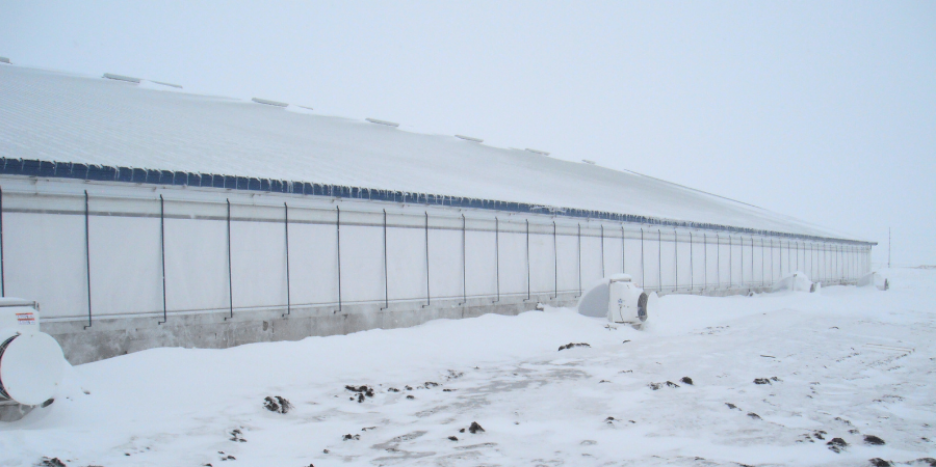
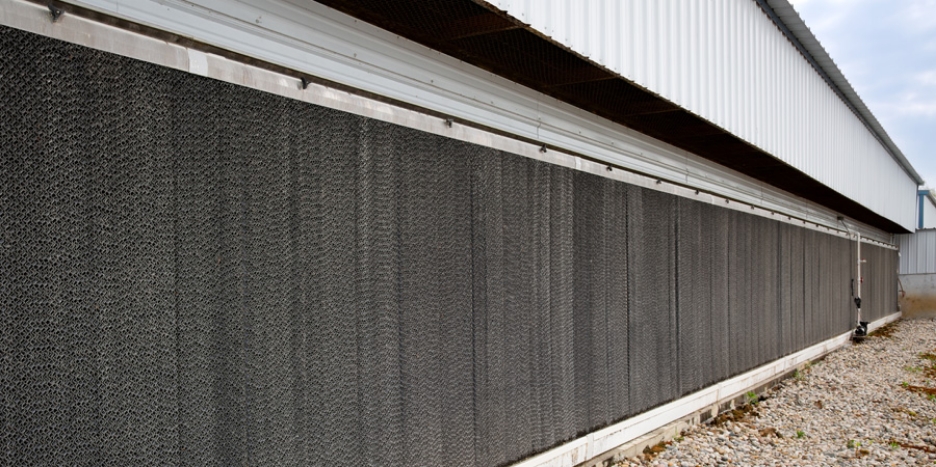
The ventilation system was upgraded with the addition of seven 52” Windstorm fans and a 5’ x 55’ cool cell system on each side of the building. The system also unitizes the existing curtain system that can be manually activated during mild weather.
To complete the project, a 20’ x 40’ egg room was added to each building. The bulk of the egg collection is done in the morning with center belts moving the eggs to the end of the building where they are placed into flats, stacked on wheeled racks and moved to the egg cooler until pick up every Tuesday and Friday.
Kip commented, “We had complete confidence in turning the project over to Mike. He’s been in the chicken industry for a long time and has broiler and laying houses of his own. We are especially pleased with the way the ventilation system performed last summer. The tunnel system combined with the cool cell system kept the hens comfortable; in fact, we experienced no loss of production despite record the heat.”
Kip continued, “Michelle is responsible for the day-to-day operations on the farm. She does an outstanding job keeping up with the paperwork necessary for organic egg production. Plus she manages two full time employees and four part timers who gather eggs. I help out with repair and maintenance as the farming operation and travel allows.” (In case you are wondering if you have heard Kip’s name before, you may have. He holds the record for soybean production at 160.6 bushels per acre and travels worldwide speaking about his production methods).
To find out more contact us at 800-949-4647 or email us at thouston@hogslat.com. We’ll sit down with you, explain your options and help you put together a plan and cost estimates for remodel or new projects. You can see photos from the Cullers operation by clicking on the following link
http://hogslat.biz/cullers_egg_farm.asp
Yuppie Hill Poultry
Written by Hog Blogger on November 22nd, 2011The Lein family’s start in the egg business began with 12 hens back in 1999. Those hens provide eggs for the family as well a few neighbors and friends. Visitors to farm thought the hens had it so good they referred to them as “yuppie chickens”. When Lynn started direct marketing eggs she adopted the brand name, Yuppie Hill Poultry. As the business grew, Lyn acquired the present farm on Potter Road and converted an existing dairy barn into a laying house for 3,000 hens.
“That first house was a lot of work. We gathered the eggs, washed them and did the feeding all by hand. The air quality was poor and production never got above 70%” remarked Lynn.
In 2008, the family decided to increase production by constructing a new 50’ x 250’ flat deck house for 9,000 hens. Although the new system saved labor with automated feeding and egg gathering, the family researched other options before their next stage of expansion.
As Jay explained, “We were not totally satisfied with our conventional deck system. We felt the environment could be better for the chickens. In addition, we were spending a lot of time cleaning out the building between groups. The extended down time between groups made it hard for us to supply our customers and reduced our income.”
Their research led them to Potter’s Poultry http://www.hogslat.biz/Cage_Free_Aviary_System.asp, one of the leading manufacturers of cage-free production systems. After contacting Hog Slat rep Jason Billings, the group traveled to England to see firsthand the Potter’s System in use.
“We visited six commercial farms in four days and came away very impressed.” said Lyn “We were particularly interested in an aviary type system because the zoning restrictions on our farm forced us into putting as many chickens as possible in a limited floor plan. The other aviary systems we had looked at were really just big cages. Potter’s has been building aviary systems for 20 years and has designed a true cage-free system that is the most open one on the market.”
Jay added “We liked what we saw and came home determined to copy the style of barns we had seen in England. The ventilation was excellent and it equipment was built extremely heavy with a lot of small features that make a big difference.”
After returning, plans were finalized on 55’ x 245’ building with a center wall running the length of the building creating two individual rooms each capable of holding 8,900 hens. By combining this capacity with the first building the Leins will have three separate flocks. Because no more than one room is ever out of production for cleaning, eggs are always available to supply customers. Construction began in mid July and the first hens were placed October 3rd.
Colony nests are stacked two high along the center wall with the aviary facing it. The AVINEST colony nests allow hens to gather in groups behind privacy curtain to lay their eggs. The system uses the original AstroTurf pads that are perforated to allow dirt to fall away ensuring cleaner eggs. Cleaner eggs are also promoted by the automatic expulsion feature where the nest floors are lifted with a rack and pinion system gently moving the hens out of the nests at night time.
The aviary features perches where feed and water are available on multiple levels. Two manure belts also run the length of the system. On the other side of the aviary, opposite the nests, is a scratch area with doors that can be opened to an outside run. The computer controlled ventilation system features chimney style fans linked with automated sidewall vents.
When I asked about the different lights installed in the building Jay explained “First the red lights above the boxes come on at 4:00 until 6:00 am with the nests’ floors dropping down to provide access to the nests. At 5:30 the whole house fluorescents come on dim and gradually increase every 15 minutes until they are on full power. Next the perch lights come on, then the lights on the second layer of the aviary come on and finally the floor lights are activated. The floor lights are key to preventing floor eggs from being laid. At night the order is reversed with boxes closing around 4:00 pm with the house lights going down at 7:00. At 8:10 the bottom lights are turned off, the middle lights at 8:20 and the house lights are shut off at 8:30. This entire sequence is automatically controlled by a master light control.”
Egg collection system on the two-tier nest system is accomplished by the use of curved mini steel rod conveyers that bring the eggs to a single level. From there another conveyer system moves the eggs to collection area where the eggs are inspected, packaged and cooled until delivery to customers.
Jay also called out the manure handling belts. “We feel that one of the biggest benefits of this system over our older building is the ability to remove the manure frequently. Because a majority of the manure is deposited under the aviary perches, we are able to run the belts located under the aviary and dumped them on to a cross belt where it is piled outside.”
“We like our niche in the market” Lynn said when we discussing Yuppie Hill’s customers. “We supply upper-end restaurants and grocery stores in Madison, Chicago and Sheboygan. We provide a quality product produced by a family farm. Demand keeps growing and this new facility will enable us do a better job supplying our customers.”
One final point of interest at Yuppie Hill farm is the original dairy barn used for the first laying house has been converted again……… into a restaurant that serves brunch every Sunday morning except the second weekend the month. The second weekend is devoted to special Saturday night theme dinner of four to five courses with neighborhood chefs invited in to host the event. The chefs prepare local foods paired with regional wines and beers. The event is becoming quite popular with the last couple of dinners being completely sold out.
If you would like to find out more about cage free egg production contacted us at thouston@ hogslat.com or call 800-949-4647. We’ll help you explored the available options for your new or remodel project. To view photos of Yuppie Hill Poultry’s building and equipment, click this link
http://hogslat.biz/yuppie_hill_poultry.asp
Have the Bin Flag Call You.
Written by Hog Blogger on October 3rd, 2011
Okay I admit it…it has been awhile since we’ve posted a blog. But I have an excuse….. We’ve been working on some new ad campaigns and new swine and poultry catalogs (which you can request a copy of at http://www.hogslat.biz/Request_Catalog.asp ). But now we are back…….. last blog was about the Bin Flag and at the end we mentioned a way to connect it to a phone alarm dialer.
When you pair the Bin Flag with an alarm phone dialer you will receive a phone alarm whenever feed levels drop below the critical level. Setting the Bin Flag up with most alarm systems is a pretty simple process. Purchase the magnetic sensor for less than $20 (item #HDL59065-952) and screw it into the Bin Flag. You then run common phone wire from the sensor to a contact on the phone dialer. The alarm system will allow you to program a unique message that identifies each particular bin.
Really I’m not so sure this isn’t a more important feature than the visual part of the Bin Flag…… normally you have to be at the building site and look at the Bin Flag. But with the Bin Flag connected to an alarm it calls you. So whether you are in the field, on the road, wherever you have cell service you will be notified when a feed outage occurs and have to time to react and get feed ordered.
You can learn more about setting up the Bin Flag with the Sensaphone and Agri-Alert alarm systems by going to our website and looking up MANUALS or clicking on this link http://www.hogslat.biz/installation_manuals.asp. Select either and it will take you through detailed steps on programming the dialers.
NO NEED TO CLIMB A BIN
Written by Hog Blogger on June 30th, 2011So…… every once in while you run across a product that is such a simple answer to a problem that you just have to say “Wow, why didn’t somebody think of that a long time ago?”
The severe winter of 2010 had us looking for an answer to monitor feed levels in bulk bins. Remember that winter? Record snow, cold, windy…….feed outages were a real problem. Nobody can or should climb an icy ladder in that kind of weather. There are some existing solutions like load cells and sonar systems, but we were looking for a simpler, less expensive way to check feed levels and protect against feed outages.
So we started looking into a ways to accomplish feed level monitoring….…..electronic sensors mounted in the bin walls, electric sensor cables hung in the bins, sonar bouncing devices from a fish finder……
One of the biggest problems that we kept coming back to was that all these methods required power be run to the bins to operate them. Extra expense……harder to install…more of a chance for break downs and failure to occur.
Then along comes the Bin Flag….

A simple, mechanical device that uses a paddle inside the bin to rotate a sight cylinder to indicate when material is present. Primarily used in industry applications to monitor levels in hopper for materials like sand, gravel, plastic beads…… it is the perfect device to measure feed levels for swine and poultry bulk bins.
It meets all the criteria we had established
1) No electricity to operate
2) Installs from the outside of the bin and you don’t need lift the bin to install
3) Low cost
4) Flexible- basic method would be install a unit just above the cone to know when it is critical to order feed. Producers also have the option of adding additional Bin Flags for more advanced monitoring.
5) Very visible- big added bonus. You can visually see the Bin Flag from up to 200 feet away. You know in a glance from across the yard how much feed is in the bins….drive by a site and check feed levels from your truck seat. It doesn’t have to be cold for that to be a bonus.
There are more details on line….go to www.hogslat.biz to check out the videos and photos.
There’s even a way to hook up Bin Flag to your existing alarm to call you when feed levels drop to a critical level. We’ll talk about that in the next blog or so.
HAM Hog Slat Ammonia Monitor
Written by Hog Blogger on June 17th, 2011Numerous studies have shown that high ammonia levels in a swine or poultry housing will have detrimental effects on growth rates. Low levels of ammonia exposure irritate the animal’s respiratory system causing reduced resistance to infections. Recent recommendations for swine call for long term exposure that does not exceed 20 ppm. Ammonia is considered the most harmful gas in broiler chickens and suggested levels should be less than 25 ppm and should not exceed 50 ppm.
Effective strategies to control ammonia include increasing ventilation rates and controlling manure admissions by treating poultry litter with amendments and using odor reducing products in swine pits. But to be truly effective it is necessary to measure current ammonia levels and any reduced levels resulting from treatments. Although high levels of ammonia are detectable by humans upon entering the animal space, levels below the 50 ppm cannot be reliability judged without some type of monitoring equipment. Typical ammonia checking devices are expensive and require frequent recalibrations.
Hog Slat and Georgia Poultry is now offering a simple, inexpensive device to test ammonia levels in swine and poultry buildings named HAM (Hog Slat Ammonia Monitor). This easy-to-use testing strip features an imbedded colorimetric indicator which changes color from yellow to blue to measure average ammonia levels present. Just hang the strip at animal level for between 4 – 24 hours and read the simple chart to identify the average PPM levels for that time period.
Using the Ammonia Monitor is straightforward. Use a large binder clip with a string attached from the ceiling to hang the monitor just above bird height in poultry houses. For swine buildings hang the monitor at pig level in the alleys where they can’t reach it. Record on the top of the strip the DATE; TIME PLACED and HOUSE # before placing.

After allowing the Ammonia Monitor to remain in the building for 4 to 24 hours, mark where the color change becomes solid blue on the colorimetric indicator with a fine felt tip pen. After that record TIME REMOVED and TOTAL HOURS. In this example the color line indicator is marked at 11 in 16 hours of time in the building.

Next, on the back of the Monitor, find the total hours and read down the column until you find the indicator number from the front. Read across the line to the left and this is the average ammonia level in the barn. In our example the reading was 11; taking the line between the 9 and 13 across to the left side we get a reading in the middle of 10 to 20 ppm or around 15 ppm.
As noted above recent recommendations for swine call for long term exposure that does not exceed 20 ppm. Ammonia is considered the most harmful gas in broiler chickens and suggested levels are less than 25 ppm and should never exceed 50 ppm. Readings above these levels would suggest producers would need to increase ventilation rates and/or control manure admissions by treating poultry litter with PLT or Poultry Guard. Swine producers should consider using pit treatments such as MircoPT or ASI Pit Hammer.
The Ammonia Monitors are individually sealed in plastic and are conveniently packaged 5 to a unit and cost only $18.95.
Please note that the Ammonia Monitor will not function correctly if cut in two as the length of the colorimetric tube and “2 open ends” are part of the calibration.
Stop Pouring Money down the Pit
Written by Hog Blogger on May 26th, 2011With feed costs reaching an all time high having the right feeder in your swine facility has never been more important. Historically American growers have enjoyed low feed costs compared to the rest of the world’s producers. Because of the supply demand created by ethanol and production shortages, we may no longer enjoy this advantage in the world market. Our industry has seen a number of trends (fads?) in feeder design in the past years. Many of these feeders became popular because of their low cost. Large numbers were installed before they were adequately tested. As production data from these feeders was complied many didn’t meet industry standards for ADG and Feed Conversion.
The charts below show Agri Stats Top 25’s average for Feed Conversion for both Feeder to Finish and Wean to Finish operations. We can use them as a baseline to compare to potential savings that can be achieved with good, well designed feeders.

Using these numbers let’s compare potential savings on a typical 1200 head finishing building with 20 feeders. For our example let’s assume that the barn is showing an average feed conversion of 2.9 , achieves 2.4 annual turns and replacing the feeders moves the FC to 2.6.
1200 head x $24.64 saved per pig space =$29,568
To replace those 20 Feeders with Hog Slat 60” feeders would cost $5,940.
To think of it another way, having efficient, easy-to-adjust feeders in a 1,200 finishing building saves $81 in feed wastage per day in our example. That means you would have to own the feeders for only 73 days to recoup your investment of $5,940!
Of the numerous brands available for replacement feeders why should Hog Slat feeders be your choice? Many of the top 25 production systems in the Agristats records are using Hog Slat feeders. The reasons are simple. For over 25 years Hog Slat has produced a quality feeder without gimmicks or following fads.
The bolt together construction adds durability that you can’t get with a welded feeder. Heavy weight hogs bang and push against feeders. Welded feeders don’t have the ability to flex with the blows and stress cracks can develop.
Hog Slat feeders have a deeper trough than most competitive brands and a feed saver lip preventing pigs from rooting feed out.
Hog Slat’s box feeders provide high storage capacity than most tube style feeders. The large storage volume contributes a safety factor for feed availability issues such as bin bridging, broken augers or motors and power failures.
Precise management of the feeder adjustments is absolutely critical to achieving good feed conversions. Every Hog Slat feeder features our unique Select-A-Flow adjustment which gives producers the ability to make fine graduated changes in feed flow. Each numbered setting presents 1/16” in feeder gate adjustment. And because each increment is numbered it is easy to set all the feeders in the barn to the same setting and repeat the settings from group to group. You can’t get this kind of repeatability using feeders designed with crank type adjustments.
Hog Slat feeders have been the industry standard for the last 25 years. Replace your existing feeders and stop pouring money down the pit.select-a-flow