
 Canada
 中国
中国 Polska
 România
 Україна
 Méjico
One of the benefits we list for the Grow-Disk system is a “superior chain.” The feed chain with molded plastic disks is the main component of the system, physically moving feed to a feeder or sow drop.
I dropped in on Hog Slat’s engineering group to see what I could find out. I found Tim Hawkins, the project engineer for the Grow-Disk product line. Tim led me to a complicated looking run of 12 corners occurring in less than eight feet with intersecting vertical and horizontal corners.
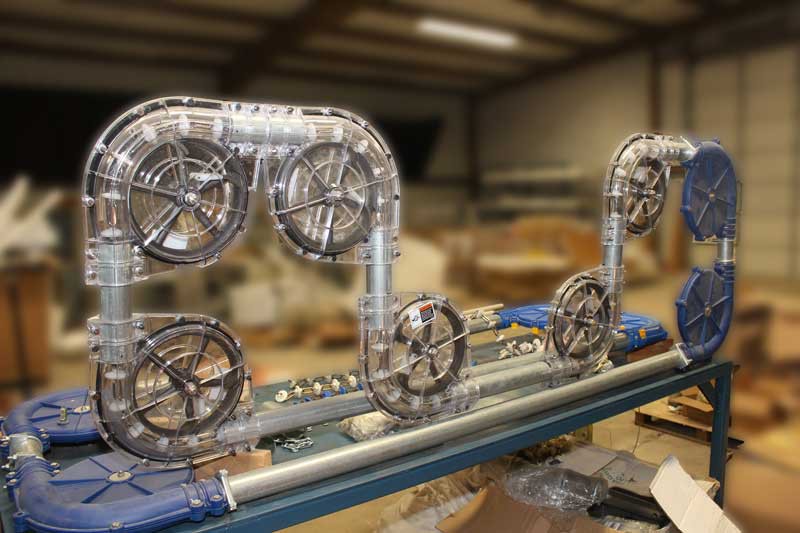
“The drive unit is off of it now,” Tim explained, “but we ran different brands of chain through this setup to show accelerated wear. Look at this…..see the metal filings in the bottom of the corner? Those showed up when we ran the last batch of electroplated chain through the unit. The process of electroplating weakens steel causing it to wear faster.”
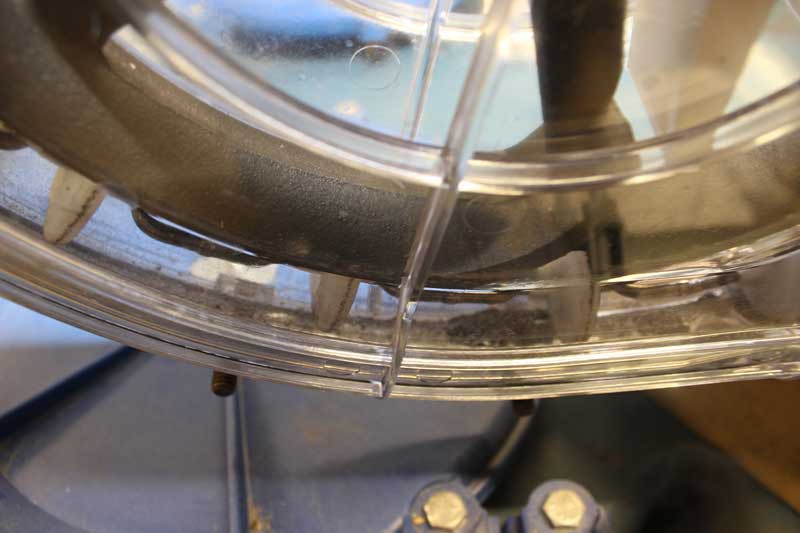
“This confirmed the difference between using hardened steel compared to galvanized or electroplated chain. Hardened steel is high carbon steel given heat treatments of quenching followed by tempering. The result is tough steel chain that resists wear without being brittle. We can run a hardened chain for days and never see filings like that.”
“With most chain feeding systems you have to adjust for “chain stretch” after the systems have operated for awhile. We don’t think the individual chain links stretch but as they go around corners constantly rubbing together they elongate because of wear.”
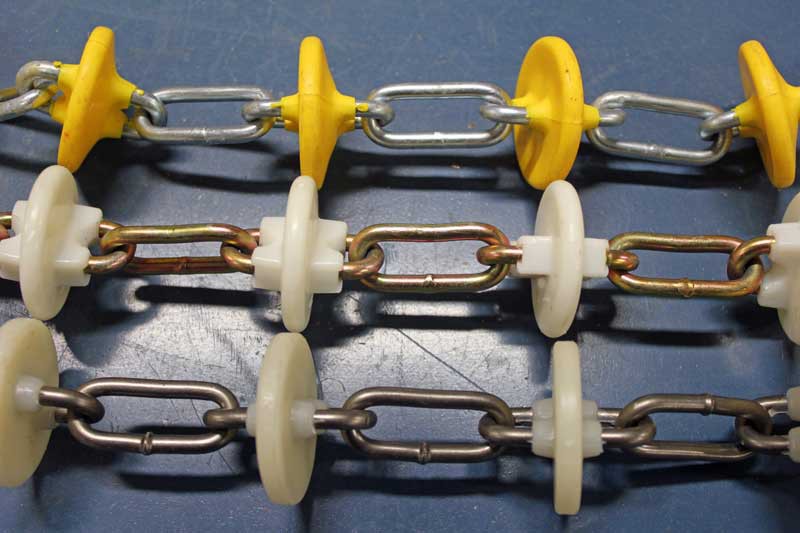
“The only reason, to galvanize steel, is to prevent rust. With the fat and oils in the feed, the chain doesn’t rust in the tube. Most brands of feeding chain is galvanized for it’s appearance before installation. A new bag of Grow-Disk may have some surface rust on it, not a big deal.”
We next looked at how well the plastic disks are fastened to the chain.
“We placed each brand of chain link in a load cell and attached it to a winch, measuring the force needed to pull the disks off the link.”
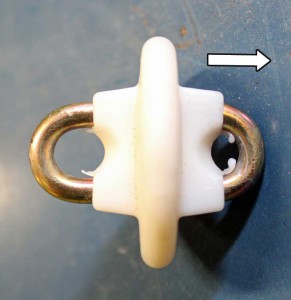
“Most of the disks pulled off at 300 lbs., although one slipped at only 160 pounds! We applied over 600 lbs. of force to the Grow-Disk disk before it slipped.”
“First of all, the disks are manufactured from nylon, a stronger, denser plastic instead of polypropylene.
Second, if you look closely at all the chains the connector welds are smooth, except on the Grow-Disk chain….see the little knob? That knob prevents the nylon disk from slipping…the nylon has to break instead of just slipping.”
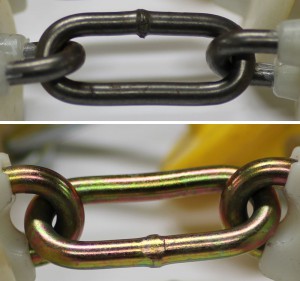
“Most feeding chain suppliers buy general purpose chain with the knob removed. By using a chain fabricated “in-house” and designed specifically for feed systems, we can produce a superior product.”
“A strong plastic disk is important because the drive sprocket powering the entire system makes contact with each, single disk for a brief moment. If an individual disk slips this causes the chain to be slightly out of alignment causing possible jams.”
You can be confident using Grow-Disk chain knowing you are buying the very best even though the cost is usually less.
Hog Slat streamlined distribution system reduces margin stacking. We manufacture and source products direct to you….eliminating extra dealer margins.
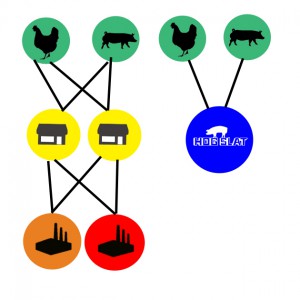
Good product engineering does not add cost to a product but instead takes manufacturing processes into account to reduce costs. It costs no more to spec a hardened chain with knobs intact to provide a better contact for injecting the nylon disk. The result is a superior product that lasts longer on your farm.
Grow-Disk systems, read more…
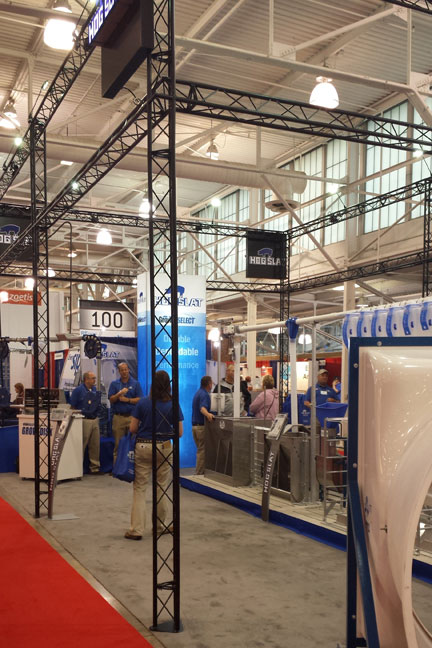
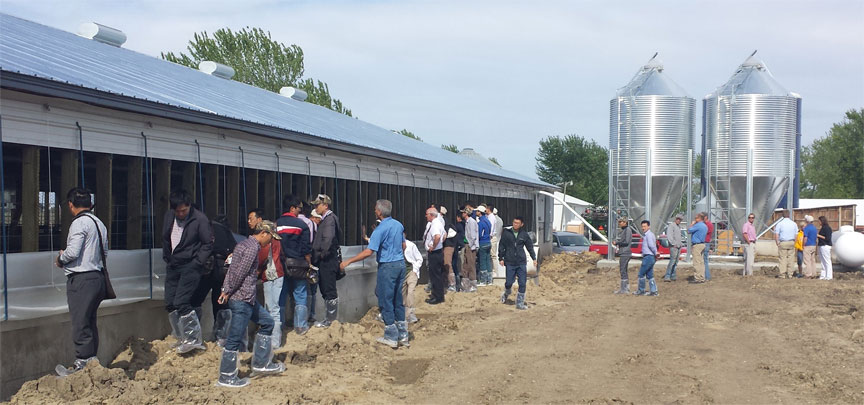
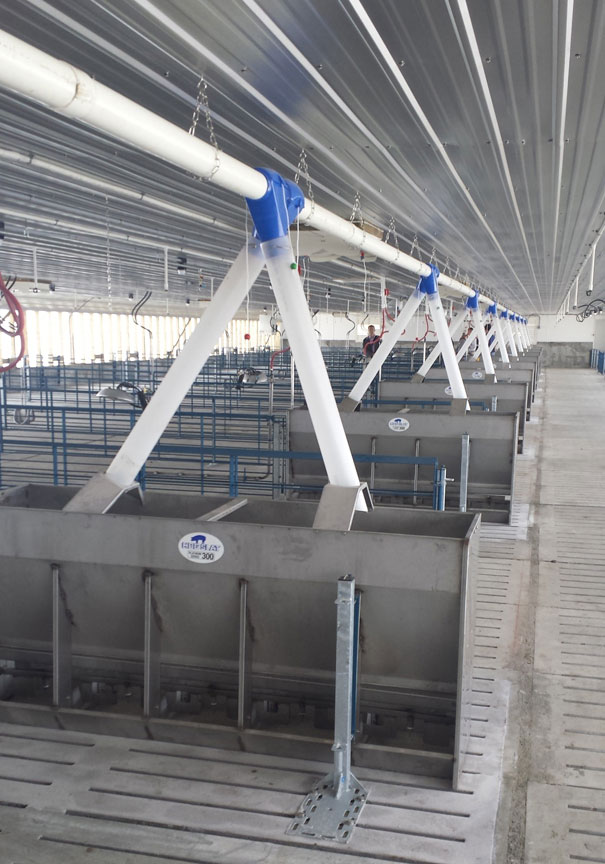
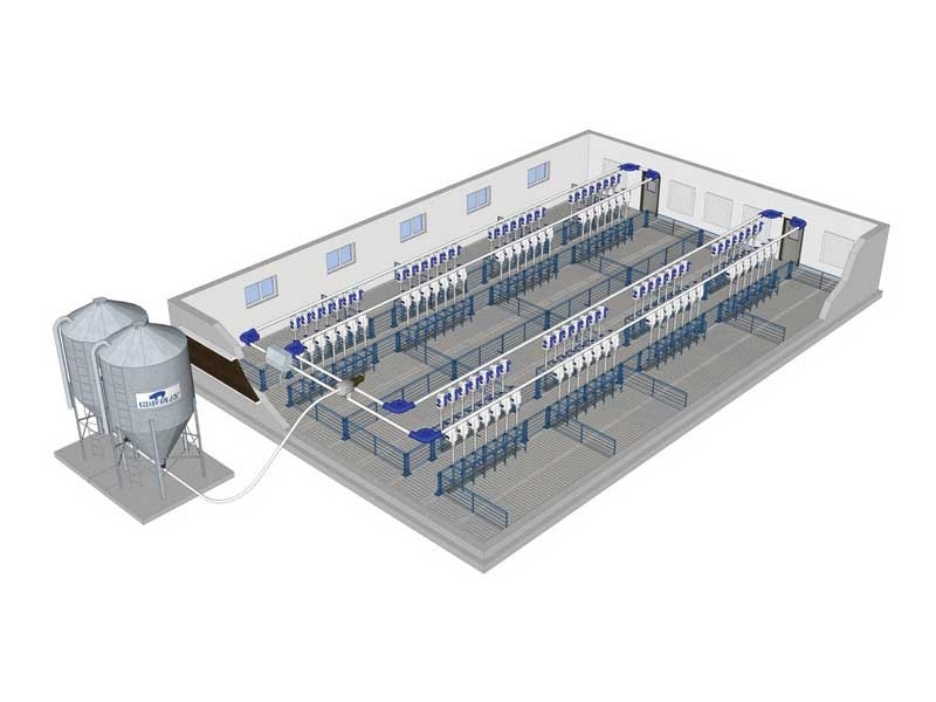
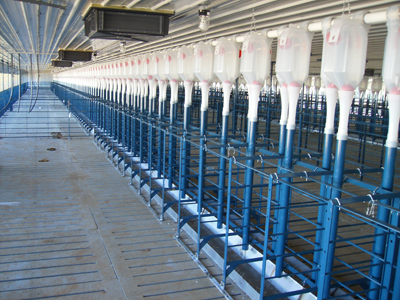 As the swine industry searches for alternatives to stall gestation, another option has emerged and is in the process of being refined. Stanchion Housing refers to short stall-like dividers that are added to open pen gestation to separate and protect the animals as they are fed. It is a refinement over traditional open pens where sow are fed on the floor and group size must be limited to reduce fighting.
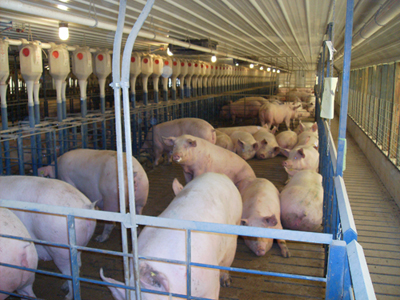 Looking at the total number of animals in a breeding group, a decision can be made on total numbers of sows per pen. Current stanchion systems range from 10 head per pen all the way up to over a hundred. Many producers choose to break a farrowing group into two or three different pens as this allows for grading and sorting weaned animals by body score. Placing sows in similar groups reduces fighting and allows for uniform feeding.
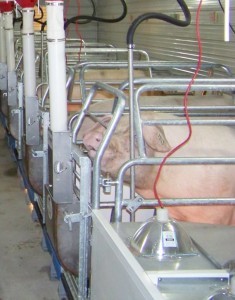
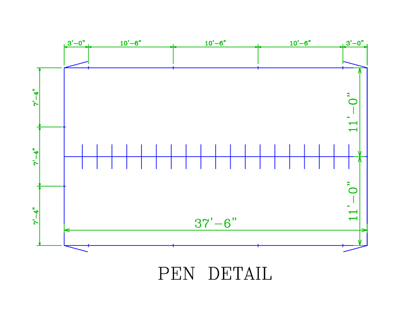 First, long narrow pens are preferred as this prevents a boss sow from blocking feed stanchions. The second design feature is placing the stanchions head to head in the center of the pen rather than placing them along the alleys. Because the stanchions are not in the alleys, the sows can be viewed from the rear during feeding for problems. It also allows for easier animal movement in and out of the pens as the gates are not part of the stanchions. In addition, the number of feed lines needed is reduced.
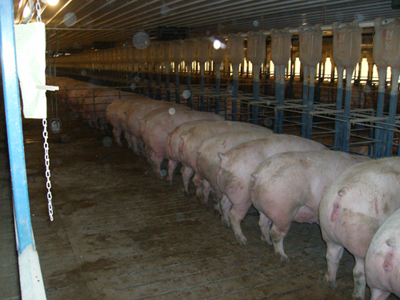 Equipment used in a head-to-head layout consists of stanchions that are 40” tall and 19” long. These dimensions protect the face and ears of the individual sow from aggressive pen mates. Ideal width has been determined to be 20” as this prevents other sows from crowding in to steal feed. Early systems used solid dividers; as we gained more experience with head-to-head systems, the use of open dividers was adopted. The Hog Slat equipment used to configure this layout is an adaption of our standard gestation stall which has been used throughout the industry for over 30 years. The stanchions are constructed of solid horizontal rods with angle top and bottom rails, the entire unit bolts together with galvanized floor spacers and double top spacers for added stability. This style of stanchion fits completely with the standard 40” gestation penning used in the rest of the pen layout. The result is a well-designed system that goes together without a great deal of “field fabrication”. AquaChief cup waterers are added at the rate of one per 11 animals to provide fresh water.
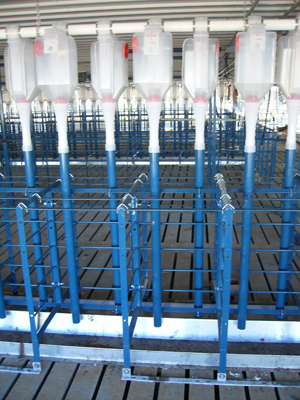 Many of the stanchion systems are remodels, the layout of which has to be adapted to existing slat /solid configurations. If building new projects most producers opt for using total slats as this allows for more flexibility in the event of changes in the welfare regulations.